
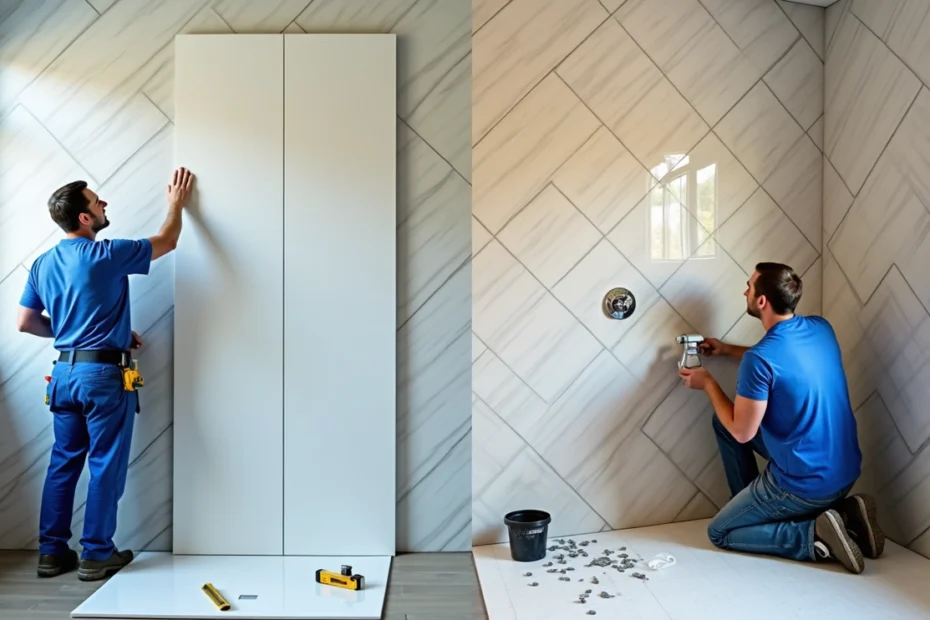
You’ve picked the tile. You’ve got the layout. You’ve budgeted the project.
But before you hand over a deposit to any contractor, there’s one question that could save you thousands of dollars and months of headaches:
Is your contractor bonded?
Most homeowners skip this question entirely. They check reviews, maybe ask for a license number, and move on. That’s a costly gap.
Here’s what bonding actually means, why it matters for bathroom remodels specifically, and how to verify it before work starts.
What Does “Bonded” Actually Mean?
A surety bond is a three-party financial guarantee. The contractor purchases a bond from a surety company, which guarantees to you that the contractor will perform the work as agreed and comply with applicable laws.
If the contractor walks off the job, fails to pay suppliers, or causes damage and disappears, the bond gives you a formal claim path.
A bond is not insurance for the contractor. It’s protection for the homeowner.
Types of Contractor Bonds
License and Permit Bonds
Required by most states before a contractor can legally pull permits. This is the baseline level of bonding.
Performance Bonds
Guarantee that the contractor completes the work according to the terms of the contract.
Payment Bonds
Protect homeowners if a contractor fails to pay subcontractors or material suppliers who could otherwise place a lien on the property.
Why Bathroom Remodels Are Especially High Risk
Bathroom remodeling projects involve multiple trades working in a specific sequence:
- Demolition
- Plumbing rough-in
- Electrical work
- Waterproofing
- Tile installation
- Fixture installation
- Finish work
If any contractor in that chain fails to perform or pay subcontractors, the entire project can come to a halt.
Common Situations Where Bonding Matters
- The contractor takes your deposit and stops responding.
- A plumber or tile subcontractor leaves because they weren’t paid.
- Improper waterproofing leads to leaks or mold and the contractor refuses to return.
- Permits are mishandled, inspections fail, and the contractor disappears.
Without a bond, your options may be limited to small claims court or a costly lawsuit.
How to Verify a Contractor’s Bond
Never assume a contractor is bonded simply because they say they are.
Step 1: Request the Bond Information
Ask for:
- Bond number
- Surety company name
- Bond amount
- Expiration date
A legitimate contractor should be able to provide this information quickly.
Step 2: Contact the Surety Company
Call the surety company directly and verify:
- The bond is active
- Coverage amount
- Expiration date
- Business name matches the contractor you’re hiring
Step 3: Check State Licensing Records
Most state licensing boards publish bond status alongside contractor license information.
Step 4: Verify Adequate Coverage
A small bond may offer limited protection on a larger project.
For example, a $5,000 bond on a $40,000 bathroom remodel may not provide enough coverage if significant issues arise.
What Bond Amount Should You Expect?
Bond requirements vary by state, contractor classification, and project size.
Typical ranges include:
| Contractor Type | Typical Bond Amount |
|---|---|
| Specialty Contractor | $5,000 – $15,000 |
| Residential General Contractor | $15,000 – $50,000 |
| Commercial General Contractor | $50,000 – $500,000+ |
For a bathroom remodel costing between $10,000 and $50,000, ask whether the contractor’s bond provides meaningful protection relative to the project value.
Bonding vs. Licensing vs. Insurance
These terms are often confused, but they serve different purposes.
Contractor License
Confirms the contractor is legally qualified to perform the work.
Surety Bond
Protects homeowners from contractor non-performance, violations, or failure to pay subcontractors.
General Liability Insurance
Covers accidental property damage and bodily injury.
Before hiring any contractor, verify all three.
Red Flags That Suggest a Contractor Isn’t Properly Bonded
Watch for warning signs such as:
- Vague answers when asked about bonding
- Claims that the bond is “being renewed” without documentation
- Bond certificates showing a different business name
- Expired bond information
- Failure to pull permits when permits are clearly required
- Cash-only pricing that bypasses permits and paperwork
While a cash discount may seem attractive, it can become very expensive if problems arise and you have little legal protection.
How Much Does a Contractor Surety Bond Cost?
Most residential contractor license bonds cost between $100 and $500 per year.
Premiums are typically 1% to 3% of the bond amount, depending on:
- Credit history
- Business experience
- Financial stability
Because bonding is relatively inexpensive, contractors who avoid it may be signaling deeper business or financial concerns.
For additional information about contractor bonds, bond requirements, and bonding options, visit ContractorBonds.us.
Bathroom Remodeling Contractor Verification Checklist
Before signing any remodeling agreement, confirm the following:
☐ Active contractor license verified with the state licensing board
☐ Bond number, surety company, and coverage amount confirmed
☐ General liability insurance verified
☐ Required permits have been pulled or scheduled to be pulled
☐ Written contract includes:
- Scope of work
- Timeline
- Payment schedule
- Lien waiver language
☐ Deposit does not exceed 10%–30% of total project cost
Taking a few minutes to complete these checks can help prevent costly disputes and project delays.
Final Thoughts
Bathroom remodeling is one of the most valuable home improvement projects you can undertake. It’s also one of the most contractor-dependent.
The success of your project depends not only on the design and materials you choose, but also on the protections you put in place before work begins.
Ask for the bond. Verify it. If a contractor resists, consider it a warning sign.
A few minutes of due diligence today could save you months of frustration tomorrow.
For more on contractor bonding requirements, bond types, and instant pricing on surety bonds, visit ContractorBonds.us.