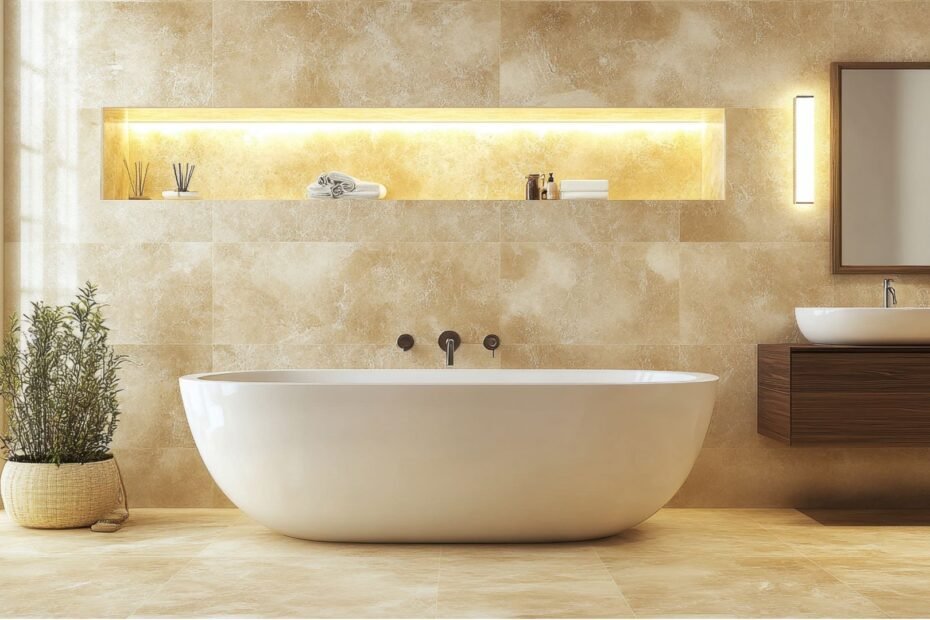
Interior designer, Santa Monica ideas can turn a basic bathroom into a calm, polished space that feels like a private retreat.
Think about the kind of bathroom that makes you slow down for a second.
Soft light.
Warm stone.
A vanity that actually has enough storage.
A shower that feels open instead of cramped.
That is the difference between simply replacing old fixtures and designing a bathroom with intention.
For more refined coastal design inspiration, explore this interior designer Santa Monica.
Why Luxury Bathroom Design Starts With Feeling
A luxury bathroom is not only about expensive tile or a dramatic bathtub.
It is about how the space feels when you walk in at 7 a.m. on a busy Monday.
I once saw a small primary bathroom feel twice as large after the tub was removed, the shower glass was extended, and the vanity lighting was moved from above the mirror to both sides.
Nothing about the room became flashy.
It simply became smarter, softer, and easier to use.
That is what good bathroom remodeling should do.
It should solve daily problems while still making the space feel beautiful.
The Santa Monica Approach To Relaxed Bathroom Luxury
Santa Monica homes often carry a relaxed coastal mood.
The best bathrooms in these spaces feel bright, clean, and effortless.
You might see limestone floors, white oak vanities, brushed nickel fixtures, soft beige walls, and linen-style window shades.
The look is not cold or overly modern.
It feels lived-in, warm, and quietly upscale.
This is where an interior designer Santa Monica style works so well.
It blends comfort, natural light, and elegant materials without making the room feel overdone.
Add Transitional Bel Air Details For A More Polished Look
Bel Air design often leans more formal, layered, and architectural.
When you blend that with a Santa Monica bathroom style, you get something special.
The space still feels relaxed, but it also feels tailored.
A curved marble backsplash.
A custom vanity with furniture-style legs.
Polished wall sconces.
A framed mirror instead of a basic builder-grade one.
These small details make the room feel finished.
They also keep the bathroom from looking like every other renovation on social media.
Start With The Vanity Because It Sets The Tone
The vanity is usually the first thing people notice.
It also gets used every single day.
For a luxury bathroom, skip the flat, basic cabinet look.
Choose a vanity that feels like a piece of furniture.
White oak works beautifully for coastal spaces.
Walnut adds richness.
Painted cabinetry in warm gray, mushroom, or soft taupe gives a more transitional feel.
The countertop matters too.
Marble brings movement and elegance.
Quartzite gives natural texture with better durability.
High-quality quartz works well if you want a clean, low-maintenance surface.
Choose Tile That Feels Timeless, Not Trendy
Tile can make or break a bathroom renovation.
Trendy tile may look exciting at first, but it can age quickly.
A safer luxury approach is to use classic materials in fresh ways.
Try large-format stone-look tile on the floor.
Use handmade ceramic tile in the shower for subtle texture.
Add a marble mosaic only in one focused area, such as the shower niche or vanity wall.
This keeps the room interesting without making it feel busy.
A bathroom should not feel like a tile showroom.
It should feel calm, balanced, and easy to live with.
Make The Shower Feel Like A Spa
A walk-in shower is one of the strongest luxury bathroom upgrades.
The goal is to make it feel open, clean, and comfortable.
Frameless glass helps the room feel larger.
A built-in bench adds function.
A rainfall showerhead creates a hotel-like feeling.
A handheld sprayer makes cleaning and daily use easier.
One detail people often forget is the shower niche.
It should be placed where it looks intentional, not randomly cut into the wall.
A long horizontal niche can look sleek and modern.
A smaller arched niche can add a softer transitional touch.
Use Lighting Like A Designer
Lighting changes everything in a bathroom.
Bad lighting makes even expensive finishes look flat.
Good lighting makes the space feel warm, flattering, and layered.
Use sconces on both sides of the mirror when possible.
Add recessed lighting for general brightness.
Place a small chandelier or pendant over a freestanding tub if the room allows it.
Use dimmers.
That one upgrade can completely change the feeling of the bathroom at night.
Bright light works for getting ready.
Soft light works for winding down.
Bring In Natural Texture
Luxury does not have to feel shiny.
In fact, the best bathrooms often include texture.
Think woven shades, wood vanities, stone floors, plaster-style walls, linen towels, and ceramic accessories.
These details keep the bathroom from feeling sterile.
They also connect beautifully with coastal California interiors.
A room with only polished surfaces can feel cold.
A room with texture feels thoughtful.
Keep The Color Palette Warm And Calm
White bathrooms are classic, but too much stark white can feel harsh.
A better approach is to use warm neutrals.
Cream.
Bone.
Sand.
Soft gray.
Taupe.
Natural wood.
Warm white walls can make the room feel clean without feeling icy.
For contrast, use aged brass, bronze, matte black, or polished nickel fixtures.
The key is restraint.
Pick one main metal finish and repeat it through the room.
That creates rhythm and keeps the design from feeling scattered.
Add Storage That Actually Works
A luxury bathroom should not have products sitting on every surface.
Smart storage is part of good design.
Use deep vanity drawers instead of only cabinet doors.
Add hidden outlets inside drawers for hair tools.
Build a tall linen cabinet if space allows.
Use recessed medicine cabinets for everyday essentials.
Add shower niches that fit real bottles, not tiny sample sizes.
I have seen bathrooms look instantly calmer just by replacing open clutter with closed storage.
It is not glamorous, but it matters.
Mix Modern Function With Classic Shape
The best transitional bathrooms balance old and new.
A sleek shower system can sit beside a traditional marble floor.
A modern floating vanity can work with classic wall sconces.
A freestanding tub can feel sculptural without looking too trendy.
This balance is what gives a bathroom long-term appeal.
It does not feel trapped in one design era.
It feels collected.
That is why transitional bathroom design works so well in luxury homes.
Do Not Forget The Small Details
Small details are where a bathroom starts to feel custom.
Cabinet hardware.
Towel hooks.
Mirror frames.
Shower drains.
Stone edges.
Grout color.
Even the way the tile lines up around corners matters.
A beautiful bathroom can lose its impact when these details are ignored.
For example, matching grout to the tile creates a softer look.
Contrasting grout creates more pattern.
Neither is wrong.
The right choice depends on the mood you want.
Add A Freestanding Tub Only If It Makes Sense
A freestanding tub looks beautiful, but it is not right for every bathroom.
If the room is too small, the tub can make the space feel crowded.
If no one uses a tub, the space may be better used for a larger shower or better storage.
Luxury should support real life.
A bathtub should feel intentional, not forced.
When it does fit, place it near natural light if possible.
Add a small stool nearby for towels, candles, or bath products.
That simple detail makes the space feel styled without trying too hard.
Create A Bathroom That Matches The Home
A bathroom should not feel disconnected from the rest of the house.
If the home has coastal interiors, keep the bathroom light and relaxed.
If the home has traditional architecture, add richer details and classic shapes.
If the home is modern, use cleaner lines and fewer decorative elements.
This is where an interior designer Santa Monica influence can be helpful.
The goal is to respect the lifestyle, location, and architecture while still making the bathroom feel fresh.
Final Thoughts
A luxury bathroom renovation is not about copying a Pinterest photo.
It is about building a space that looks beautiful, works better, and feels good every day.
The strongest designs usually come from balance.
Coastal ease from Santa Monica.
Polished detail from Bel Air.
Warm materials.
Smart lighting.
Quiet storage.
Timeless finishes.
When those pieces come together, the bathroom stops feeling like a utility room.
It becomes a space you actually enjoy using.