
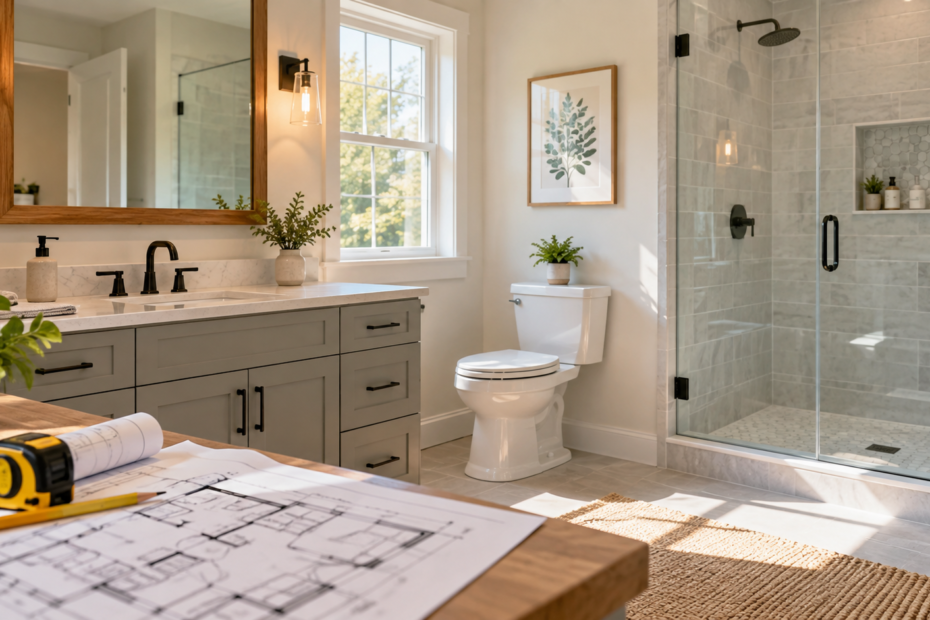
Adding a bathroom to your home typically costs about $30,000 to $53,500 for a new full-bath addition with midrange finishes heading into 2027. Converting existing space is much cheaper, often $18,000 to $31,000 for a full bath in a closet or spare room, while a large primary bathroom addition can pass $90,000.
Use the calculator below to estimate your project, then read on for costs by project type, what drives the price, and how to plan.
Bathroom addition cost calculator
Bathroom addition cost by project type
These ranges use national average prices and midrange finishes. They include the structure or framing, the finished bathroom, plumbing, electrical and ventilation, and design and permits.
| Project | Half bath (25 sq ft) | Full bath (40 sq ft) |
|---|---|---|
| New addition (crawl space) | $24,000 – $45,000 | $30,000 – $53,500 |
| Convert an existing room or closet | $13,000 – $23,000 | $18,000 – $31,000 |
| Basement bathroom (upflush) | $13,500 – $24,000 | $17,000 – $29,000 |
| Attic bathroom | Varies | $23,000 – $41,500 |
A 100-square-foot primary bathroom addition with a separate tub and shower and a double vanity typically runs about $57,500 to $93,500. A high-end 150-square-foot primary suite can cost $100,000 to $150,000 or more.
Where the money goes
For a new 40-square-foot full-bath addition on a crawl space with midrange finishes:
| Cost category | Typical cost |
|---|---|
| Addition structure (foundation, framing, roof, siding, insulation, drywall) | $12,000 – $21,000 |
| Bathroom finish-out (tub/shower, tile, vanity, toilet, fixtures) | $10,500 – $14,000 |
| Plumbing rough-in | $3,000 – $6,000 |
| Electrical, ventilation, and HVAC | $2,500 – $6,500 |
| Design, engineering, and permits | $2,000 – $6,000 |
Because the foundation, roof tie-in, and exterior work cost a lot regardless of size, small additions often run $750 to $1,400 or more per square foot, far higher than remodeling an existing bathroom.
What affects the cost
New addition vs. existing space
Building out means a foundation, walls, a roof, windows, siding, and insulation before any bathroom work starts. Converting a closet, part of a bedroom, a laundry room, or an unfinished basement skips most of that and is usually the most affordable path.
Distance to existing plumbing
The farther the new bathroom is from existing drain and vent lines, the more it costs. A bathroom that shares a wall with an existing bathroom or kitchen might need $1,500 to $3,000 in plumbing rough-in, while one that needs a new drain stack can cost $6,000 to $12,000.
Basement drains
Basement bathrooms often sit below the main sewer line. An upflush (macerating) system pumps waste up and typically costs $1,500 to $3,000 installed. Breaking up the concrete floor to run a gravity drain costs about $3,000 to $8,000. Our toilet replacement cost calculator includes upflush toilets.
Foundation and location
A slab foundation is usually the least expensive for a ground-floor addition, followed by a crawl space. Building a bathroom on a second story or over a garage costs more because of structural work and access.
Finishes
Finishes have a big impact. On a new full-bath addition, going from budget to high-end finishes, with a tiled walk-in shower, quartz, and better fixtures, moves the total from about $28,000 to $51,500 up to about $43,500 to $72,000. See our walk-in shower, vanity, and tile calculators for detailed pricing.
Location
Labor costs vary widely by state. The same new full-bath addition runs about $37,000 to $65,500 in California and about $26,500 to $48,000 in Alabama.
Planning a bathroom addition
- Check zoning and setbacks before designing a new addition. Some lots have limits on how close you can build to the property line, and HOAs may have their own rules.
- Find the plumbing. Locating the new bathroom near existing drain and vent lines is the single biggest way to save.
- Plan ventilation. Every new bathroom needs an exhaust fan vented outdoors. See our exhaust fan installation cost calculator.
- Get design and engineering help for additions, second-story bathrooms, and attics, which may need structural changes.
- Get at least three bids from licensed, insured contractors that list structure, plumbing, electrical, finishes, and permits separately.
- Budget a cushion of 10% to 15% for surprises.
Ways to save
- Convert existing space instead of building out.
- Put the bathroom back-to-back with an existing bathroom or kitchen.
- Choose a tub/shower combo or prefab shower instead of a custom tiled shower.
- Use stock vanities and standard fixture sizes.
- Build a half bath if you don’t need a shower.
- For basements, use an upflush system instead of breaking concrete.
Remodeling an existing bathroom instead? Try our bathroom remodel cost calculator or browse all our cost calculators.
Frequently asked questions
How much does a bathroom addition cost?
A new full bathroom addition typically costs about $30,000 to $53,500 at national average prices with midrange finishes. A half-bath addition runs about $24,000 to $45,000, and a 100-square-foot primary bathroom addition about $57,500 to $93,500. Adding a bathroom inside existing space usually costs much less.
What is the cheapest way to add a bathroom?
Converting existing space next to current plumbing is usually cheapest. Turning a closet or part of a bedroom into a full bathroom typically costs about $18,000 to $31,000, and a half bath about $13,000 to $23,000. A basement bathroom with an upflush system runs about $17,000 to $29,000.
How much does it cost to add a half bath?
A half bath built inside existing space next to plumbing typically costs about $13,000 to $23,000. Building a new half-bath addition costs more, about $24,000 to $45,000, because it includes a foundation, framing, and a roof.
Does adding a bathroom add value to a home?
Adding a bathroom often helps resale, especially in homes with only one bathroom or where bedrooms outnumber bathrooms. How much value it adds depends on your local market, so ask a real estate agent before you build.
How long does it take to build a bathroom addition?
A new bathroom addition usually takes two to four months from design through final inspection. Converting existing space into a bathroom often takes four to eight weeks.
Do I need a permit to add a bathroom?
Yes. Adding a bathroom almost always requires building, plumbing, and electrical permits, and new additions may also need a site plan and zoning approval. Your contractor usually pulls permits, and the cost is included in our estimates.
Estimates are national average costs for 2027 planning and are not quotes. See our disclaimer and affiliate disclosure.

Pingback: Bathroom Exhaust Fan Installation Cost Calculator (2027)
Pingback: Bathroom Remodeling Guide: Costs, Trends & Smart Planning
Pingback: Bathroom Upgrades for Home Value