
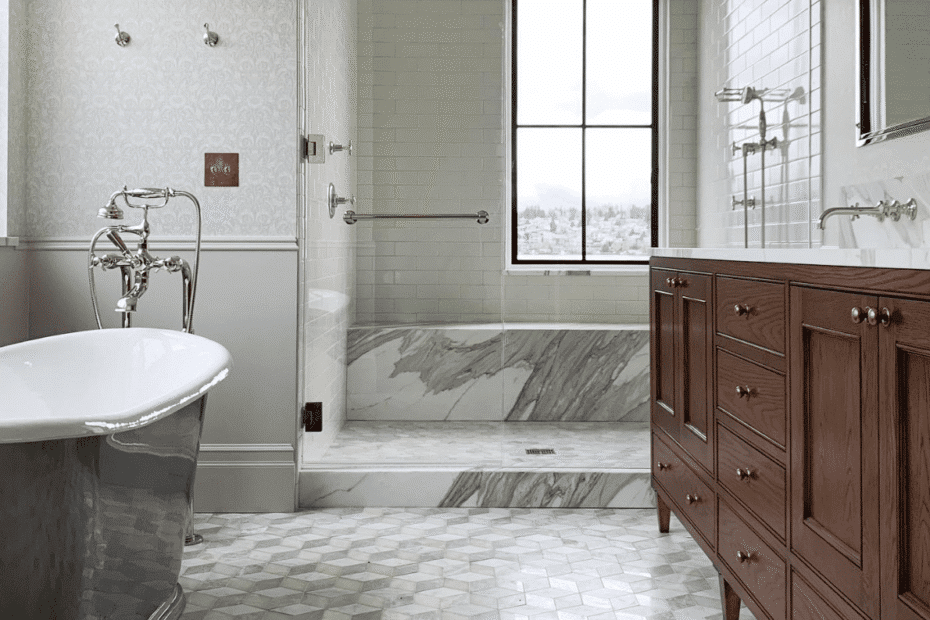
Use this tile calculator to find out how many boxes of tile to buy for a floor, shower, wall, or backsplash, along with the grout, thinset, and backer board you’ll need. It also estimates the cost to do it yourself or hire a pro, adjusted for your state.
Tile calculator
How the tile calculator works
- Area: It multiplies your length and width (or wall length and height) and subtracts anything you won’t tile.
- Waste: It adds extra tile for cuts and breakage based on your layout: 10% for a straight grid, 12% for offset, 15% for diagonal, and 20% for herringbone. Large-format tile adds a little more because each broken piece is a bigger loss.
- Boxes: It divides the total by the square feet per box and rounds up. Enter the coverage from your tile’s label for the most accurate count.
- Setting materials: It estimates grout from your tile size and joint width, thinset from the tile size, and backer board sheets from the area.
- Cost: It prices materials for a DIY job and adds installation labor, removal, and prep for a professional estimate.
Tile installation cost by project
These examples use national average prices, a straight layout, and no removal of old tile.
| Project | Tile area | Materials (DIY) | Installed by a pro |
|---|---|---|---|
| 5 × 8 ft bathroom floor, 12 × 24 in porcelain | 40 sq ft | $310 – $350 | $710 – $1,070 |
| 100 sq ft floor, 12 × 24 in porcelain | 100 sq ft | $770 – $880 | $1,670 – $2,680 |
| Tub surround, ceramic subway tile | 50 sq ft | $310 – $430 | $1,060 – $1,680 |
| Walk-in shower walls, ceramic subway tile | about 80 sq ft | $490 – $680 | $1,730 – $2,740 |
| Bathroom wainscot, ceramic subway tile | about 50 sq ft | $230 – $280 | $720 – $1,160 |
| Kitchen backsplash, ceramic subway tile | 30 sq ft | $120 – $150 | $520 – $850 |
Small jobs cost more per square foot because installers charge a minimum for a visit. A 6-square-foot vanity backsplash might cost $50 to $80 in materials but $450 or more to have installed.
How many boxes of tile for a 40 sq ft floor?
Tile size changes how many pieces you need and how much grout you’ll use. Here’s what a typical 5 × 8 ft bathroom floor takes with a straight layout and 1/8-inch joints:
| Tile size | Tiles or sheets | Boxes (typical) |
|---|---|---|
| 2 × 2 in mosaic (12 × 12 in sheets) | 44 sheets | 5 |
| 3 × 6 in subway | 352 tiles | 4 |
| 4 × 4 in | 396 tiles | 4 |
| 6 × 24 in plank | 45 tiles | 4 |
| 12 × 12 in | 44 tiles | 3 |
| 12 × 24 in | 23 tiles | 3 |
| 24 × 24 in | 12 tiles | 3 |
Tile prices by material
- Ceramic: About $1 to $4 per square foot. Affordable and easy to cut, ideal for walls and backsplashes.
- Porcelain: About $3 to $8 per square foot. Denser and more water-resistant than ceramic, and the go-to choice for bathroom floors and showers.
- Natural stone: About $5 to $15 or more per square foot. Marble, travertine, and slate look beautiful but need sealing and cost more to install.
- Glass: About $10 to $30 per square foot. Usually used as mosaic accents or backsplashes rather than whole floors.
Installation labor typically adds $7 to $14 per square foot for floors, $10 to $18 for walls, and $15 to $25 for shower walls with waterproofing. Herringbone and diagonal layouts, mosaics, and large-format tile add to the labor cost.
Setting materials you’ll need
Grout
Grout fills the joints between tiles. Narrow joints of 1/16 to 1/8 inch usually use unsanded grout or a premium grout made for tight joints, while joints 1/8 inch and wider typically use sanded grout. Small tiles and wide joints use much more grout than large tiles with tight joints.
Thinset mortar
Thinset bonds the tile to the floor or wall. Larger tiles need a bigger trowel notch and more mortar, so a 50-pound bag covers less area. Large-format tile also needs a mortar rated for it and back-buttering to avoid hollow spots.
Backer board and waterproofing
Cement backer board, or a foam board system, gives tile a stable base on floors and walls. In showers, the walls and pan also need a waterproof membrane. Never tile a shower directly over regular drywall.
Tips for buying tile
- Buy from one lot. Color and shade can vary between production runs, so check the lot number on each box.
- Keep spares. Save a few tiles after the job so you can make repairs later.
- Check the box coverage. Two tiles of the same size can come in boxes that cover different areas.
- Order samples first. Look at tile in your own lighting before buying the full amount.
- Check returns. Ask whether unopened boxes can be returned before you buy extra.
DIY or hire a tile installer?
Tiling a small floor, backsplash, or wainscot is a realistic DIY project if you’re comfortable measuring, cutting, and setting tile level. Doing it yourself can cut the cost by half or more. Showers are a different job: a leak behind the tile can cause rot and mold, so waterproofing has to be done carefully. Large-format tile also takes skill to install flat. Many homeowners tile floors and backsplashes themselves and hire a pro for showers.
Tiling as part of a bigger project? Our bathroom remodel cost calculator and walk-in shower cost calculator include tile along with everything else. See all our tools on the calculators page.
Frequently asked questions
How do I calculate how much tile I need?
Multiply the length and width of the area in feet to get square feet, subtract any areas you won’t tile, then add 10% for waste on a straight layout, 15% for diagonal, or 20% for herringbone. Divide the total by the square footage listed on one box of tile and round up.
How much extra tile should I buy?
Buy at least 10% extra for a straight or grid layout and 12% to 15% for offset, diagonal, or large-format tile. Herringbone and chevron patterns can need 20% or more. Keep a few leftover tiles for future repairs.
How much does it cost to tile a bathroom floor?
A 40-square-foot bathroom floor in 12 × 24-inch porcelain typically costs about $310 to $350 in materials if you do it yourself, or about $710 to $1,070 installed by a pro at national average prices. Removing old tile or leveling the floor adds to the cost.
How much does it cost to tile a shower?
Tiling the walls of a standard tub surround, about 50 square feet, typically costs $1,060 to $1,680 installed with ceramic subway tile and waterproofing. A larger walk-in shower with about 80 square feet of wall tile runs about $1,730 to $2,740.
How much grout do I need?
It depends on the tile size, joint width, and tile thickness. Small tile and wide joints need much more grout. A 40-square-foot floor in 12 × 24-inch tile with 1/8-inch joints needs only a few pounds, while the same floor in 2 × 2-inch mosaic needs about 15 to 20 pounds. The calculator works this out for you.
Is tile priced per square foot or per box?
Most tile is priced per square foot but sold by the box. Check the square footage on the box label, since coverage varies by brand and tile size, and buy whole boxes from the same production lot so the color matches.
Estimates are national averages for 2027 planning and are not quotes. Always confirm quantities with your tile supplier. See our disclaimer and affiliate disclosure.
Pingback: 5x8 Bathroom Remodel Cost (2027): Calculator & Breakdown
Pingback: 5x9 Bathroom Remodel Cost (2027): Calculator & Budget Guide
Pingback: 5x10 Bathroom Remodel Cost (2027): Calculator & Breakdown
Pingback: Small Bathroom Remodel Cost Calculator (2027): Prices & Ideas
Pingback: Bathtub Refinishing Cost Calculator (2027): Reglazing Prices
Pingback: Bathroom Addition Cost Calculator (2027): Cost to Add a Bathroom